

The Challenge: Powering Data-Intensive Workloads
Big Data isn't just about size; it's about throughput. Public clouds often fail to meet the demands of modern analytics due to:
-
The "Noisy Neighbor" Effect: Shared resources in virtualized environments lead to unpredictable I/O latency, killing the performance of disk-heavy jobs like Hadoop MapReduce.
-
Egress Fee Shock: Moving terabytes of data in and out of the cloud can cost more than the server itself.
-
Virtualization Overhead: The hypervisor layer consumes valuable CPU cycles and adds latency to storage requests, slowing down real-time ingestion.
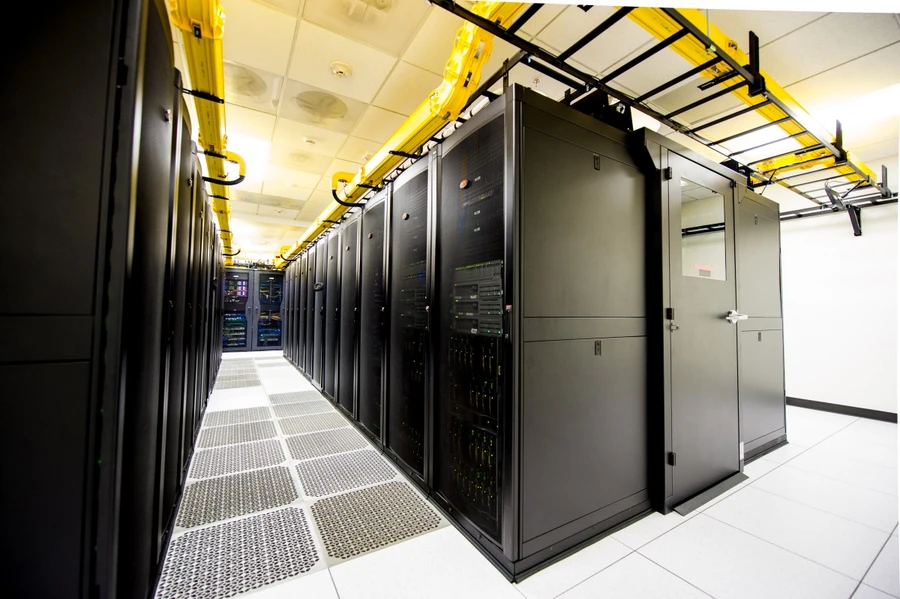

The Solution: The Dedicated Server Advantage
For Big Data, Bare Metal is the baseline. EPY Host offers single-tenant environments where 100% of the system resources are dedicated to your pipeline.
With direct access to NVMe storage arrays, you achieve millions of IOPS for rapid data ingestion and querying.
Predictable pricing with 10Gbps and 40Gbps unmetered uplinks, perfect for shuffling massive datasets between cluster nodes.
You know exactly where your data physically resides, simplifying compliance with GDPR, HIPAA, and other data regulations.
Critical Big Data Workloads
We optimize hardware for the distinct stages of the data lifecycle:
Batch Processing (Hadoop/MapReduce)
For traditional data warehousing and historical analysis. These workloads require high core-count CPUs to parallelize tasks and massive storage density.
Real-Time Stream Processing (Kafka/Flink)
For ingesting data from IoT devices, financial logs, or clickstreams. Low latency is non-negotiable here.
In-Memory Analytics (Spark)
For iterative algorithms that need to process data faster than disk speeds allow.
NoSQL & Search (Elasticsearch/Cassandra)
For high-speed read/write operations on unstructured data.
Popular Use Cases
FinTech
High-frequency trading logs and fraud detection algorithms requiring microsecond latency.
Healthcare
Storing and analyzing massive genomics sequencing files and medical imaging.
Log Analytics
Centralized logging for cybersecurity threat detection (SIEM).
AdTech
Real-time bidding (RTB) platforms that process millions of requests per second.
How to Configure Your Ideal Big Data Server
Building a Big Data server requires a different strategy than a standard web server. You must balance Storage Hierarchy (Tiering) with Network Throughput.
1. Storage: The Tiered Approach
Don't put everything on one drive type. Use a tiered architecture for cost-efficiency.
2. Network: Throughput is Critical
In a cluster (like Hadoop or Cassandra), servers constantly talk to each other ("shuffling" data).
3. RAM: The "Spark" Fuel
If you run Apache Spark or in-memory databases (Redis/Memcached), RAM is your primary constraint.
4. CPU: Cores over GHz
Big Data frameworks are designed to be parallel.
Optimized Configurations by Framework
| Workload | Recommended Hardware Focus | Why? |
|---|---|---|
| Hadoop / HDFS | Storage Density (HDD) | Requires massive, cheap storage. CPU power is secondary. |
| Apache Spark | Maximum RAM | Spark processes data in memory. If RAM fills up, it spills to disk, slowing performance by 100x. |
| Elasticsearch | NVMe Storage | Search queries rely on fast random I/O reads. HDDs are too slow for instant search results. |
| Kafka | Network & Fast Writes | Needs fast sequential writes to disk and a huge network pipe to ingest streams. |
Frequently Asked Questions
Cost and Predictability. Cloud providers charge "egress fees" every time you move data, which gets expensive at the Petabyte scale. Bare Metal offers a fixed monthly cost with unmetered bandwidth and 20-30% better I/O performance because there is no hypervisor layer.
Absolutely. EPY Host offers private VLANs (Virtual Local Area Networks). We can connect your servers via a private 10Gbps or 40Gbps backend network, allowing them to communicate securely and instantly, perfect for creating a Hadoop or Spark cluster.
- For Speed (scratch data): RAID 0 (No redundancy, max speed).
- For Production Databases: RAID 10 (High speed + redundancy).
- For Massive Archives: RAID 60 (Protects against dual drive failures while maintaining decent read speeds).
Yes. While traditional Big Data relies on CPUs, modern frameworks (like RAPIDS.ai or Spark 3.0+) can accelerate data processing using NVIDIA GPUs. Check our AI & ML Solutions page for GPU-specific builds.