
Multi-Account Isolation
Web Host Manager (WHM) allows you to securely partition your single-tenant node. Create individualized, walled-off environments for hundreds of clients, ensuring that a traffic spike on one domain never impacts another.
Streamline your web hosting operations with EPY Host's unshared physical hardware, fully integrated with the industry's leading graphical interface. Spanning premier data centers worldwide, our raw compute environments offer absolute resource isolation.
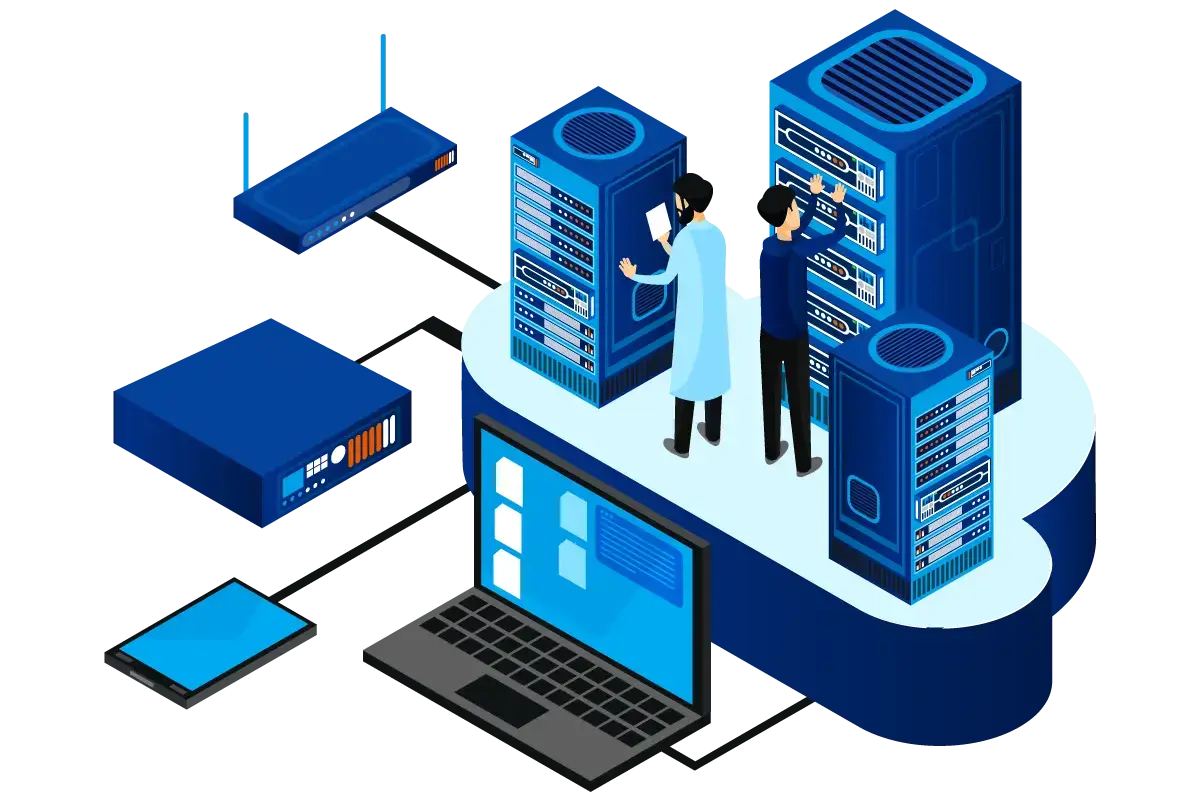
Navigate our comprehensive catalog to pinpoint the exact physical machine for your WHM environment. Utilize the advanced filtering system to sort by processor architecture, RAM capacity, storage configuration, and geographical region.
Try adjusting your monthly budget, CPU brand, or server type to find available bare metal configurations.
Fuse the intuitive power of the world's most recognizable hosting dashboard with the raw, unthrottled processing capabilities of isolated physical hardware.
Web Host Manager (WHM) allows you to securely partition your single-tenant node. Create individualized, walled-off environments for hundreds of clients, ensuring that a traffic spike on one domain never impacts another.
Eliminate the manual burden of certificate renewals. With AutoSSL seamlessly integrated, every domain routed through your physical compute instance receives continuous encryption coverage.
Transitioning enterprise workloads is effortless. The built-in transfer tool securely packages and migrates databases, emails, and site files from any legacy environment directly to your new infrastructure.
Unlike virtualized cloud instances subject to hypervisor tax and noisy neighbors, deploying this control panel on raw silicon guarantees 100% utilization of your CPU cycles and RAM arrays.
Scaling a digital agency or managing complex staging environments requires granular backend control. Our provisioned nodes come pre-configured to handle modern development workflows directly from the graphical user interface.
Common inquiries regarding our managed WHM integration and single-tenant infrastructure.
Yes. While CentOS, AlmaLinux, and Ubuntu are standard deployments, you can install CloudLinux to establish Lightweight Virtual Environment (LVE) limits. This guarantees that a single high-traffic domain will never exhaust your machine's physical resources.
Absolutely. By utilizing CloudLinux or specific WHM packages, you can cage each user. This provides absolute granular control over processing power, memory usage, and concurrent connections per tenant.
Because you are leasing unshared hardware with a strictly isolated IP address, there are no artificial outbound throttling caps imposed by a hypervisor. You maintain total administrative control over your Exim mail server configuration and domain reputation.
Yes, the built-in migration utility is highly versatile. It can read and convert backup archives from major alternative administrative panels, making the transition to your new compute node remarkably smooth with minimal data mapping required.
The primary administrative license is bound solely to the main allocated IP address of the machine. Any additional IPv4 or IPv6 addresses you route to the node can be freely assigned to individual client accounts, resellers, or SSL certificates without requiring extra licensing fees.
You have complete autonomy over your backup strategy. You can configure native automated routines to push encrypted archives to remote block storage, or install enterprise plugins like JetBackup for highly granular, incremental snapshot recovery.
You are not restricted. With root privileges, you can easily compile NGINX as a reverse proxy via EasyApache 4, or install drop-in replacements like LiteSpeed Web Server to drastically accelerate PHP processing times and optimize concurrent connections.
Yes. Through the Reseller Center, you can create highly customized Access Control Lists (ACLs). This allows you to grant specific users the ability to restart services, suspend accounts, or manage DNS zones without exposing the underlying root architecture.
While hardware isolation is a foundational requirement for strict compliance, the operating system still requires manual cryptographic tuning. You will need to disable outdated TLS protocols and secure cipher suites within the administrative interface to achieve a passing PCI-DSS scan.
Upgrading RAM or inserting additional NVMe drives requires the physical machine to be briefly powered down by our remote hands team. However, the software configuration remains entirely untouched, meaning your hosted sites will resume instantly once the node is brought back online.