As we progress through the 2027 enterprise landscape, public AI APIs are posing significant challenges: escalating token costs, restrictive rate limits, and severe data privacy risks. To retain intellectual property and achieve predictable operational expenditures, organizations are rapidly transitioning to sovereign AI infrastructure.
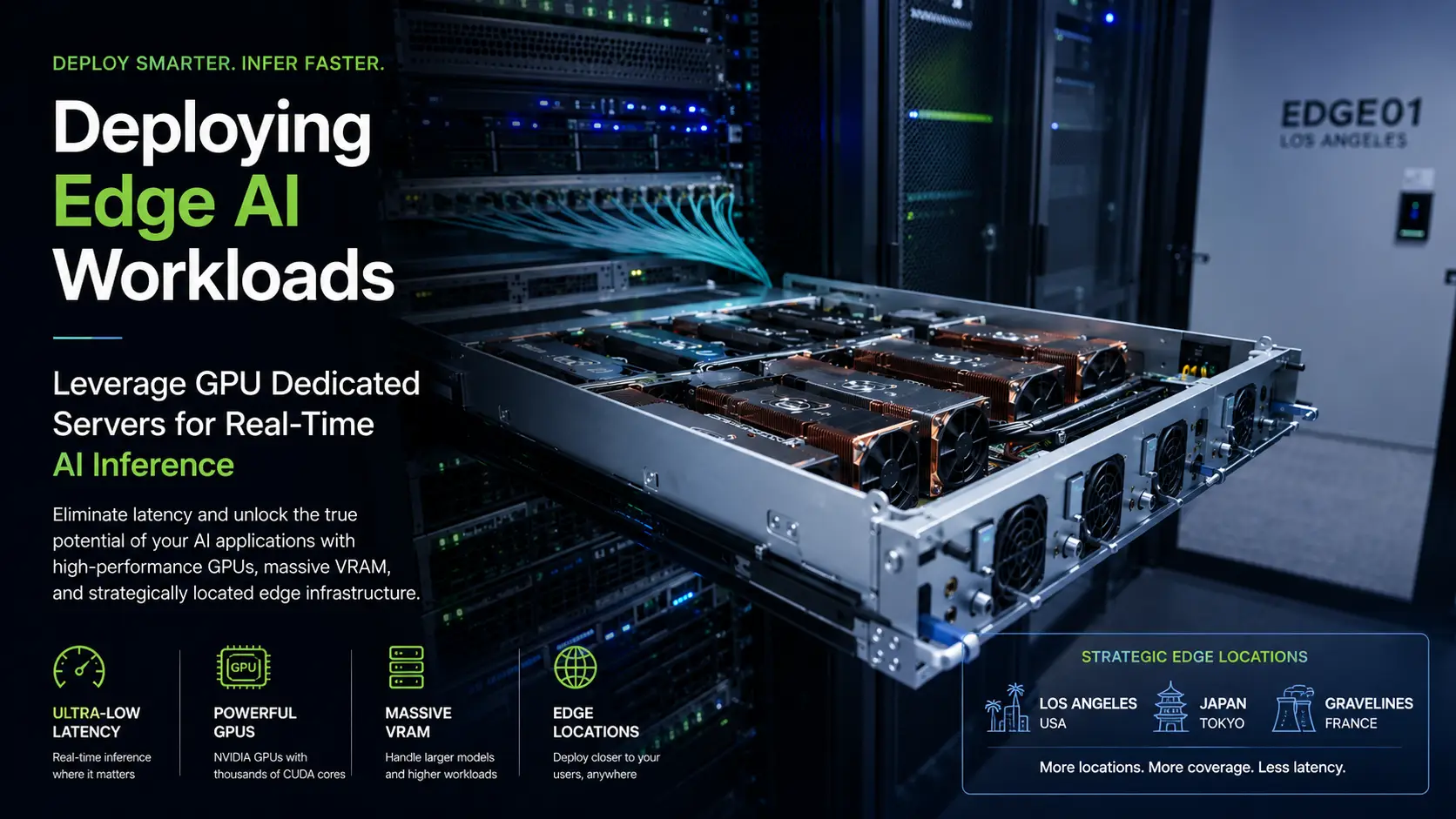
Deploying open-weight models like Meta’s Llama 3 or DeepSeek-R1 directly on high-performance GPU dedicated servers ensures zero data leakage and ultra-low latency. The success of an on-premise AI deployment relies on matching the right underlying hardware with optimal serving frameworks.
Choosing the Right Serving Engine: Ollama vs. vLLM
The framework you choose fundamentally dictates your infrastructure's concurrency and API throughput capabilities.
📦 Ollama (Rapid Prototyping)
Ollama operates similarly to Docker for large language models, allowing engineers to pull and run quantized models with a single command. It is ideal for local development, internal R&D testing, and environments where concurrent user traffic is relatively low.
🚀 vLLM (Production Scale)
vLLM is an Apache 2.0-licensed inference engine designed for maximum throughput. It utilizes PagedAttention—treating GPU VRAM like virtual memory to reduce fragmentation—and continuous batching to serve hundreds of concurrent users without stalling. It also provides a seamless, drop-in OpenAI-compatible API.
Hardware Sizing and VRAM Allocation
Running models on bare metal requires precise GPU memory calculations. A standard 2027 rule of thumb for quantized (Q4) models is allocating roughly 0.6GB of VRAM per billion parameters, plus additional overhead for the context window and concurrent requests.
Small Models (8B - 14B)
Models like DeepSeek-R1:8b or Llama 3 8B require 12GB to 16GB of VRAM, fitting comfortably on single mid-range consumer or workstation GPUs.
Mid-Tier Models (32B)
Models such as DeepSeek-R1:32b require a minimum of 24GB of VRAM, necessitating high-end single GPUs like the NVIDIA RTX 4090 or RTX A5000.
Enterprise Models (70B+)
Running 70B+ parameter models demands 48GB to 80GB of VRAM. This requires professional-grade silicon like NVIDIA A100s, RTX A6000s, or specialized multi-GPU tensor-parallel configurations.
Bare Metal Architecture for AI Workloads
Deploying on bare metal removes the hypervisor virtualization tax, allowing direct communication between the inference engine and the GPU via native PCIe lanes.
- Native OS & Drivers: Install standard Linux distributions natively alongside the latest proprietary NVIDIA drivers.
- Container Toolkit: Deploy the NVIDIA Container Toolkit to pass physical GPUs securely and efficiently into Docker containers running Ollama or vLLM.
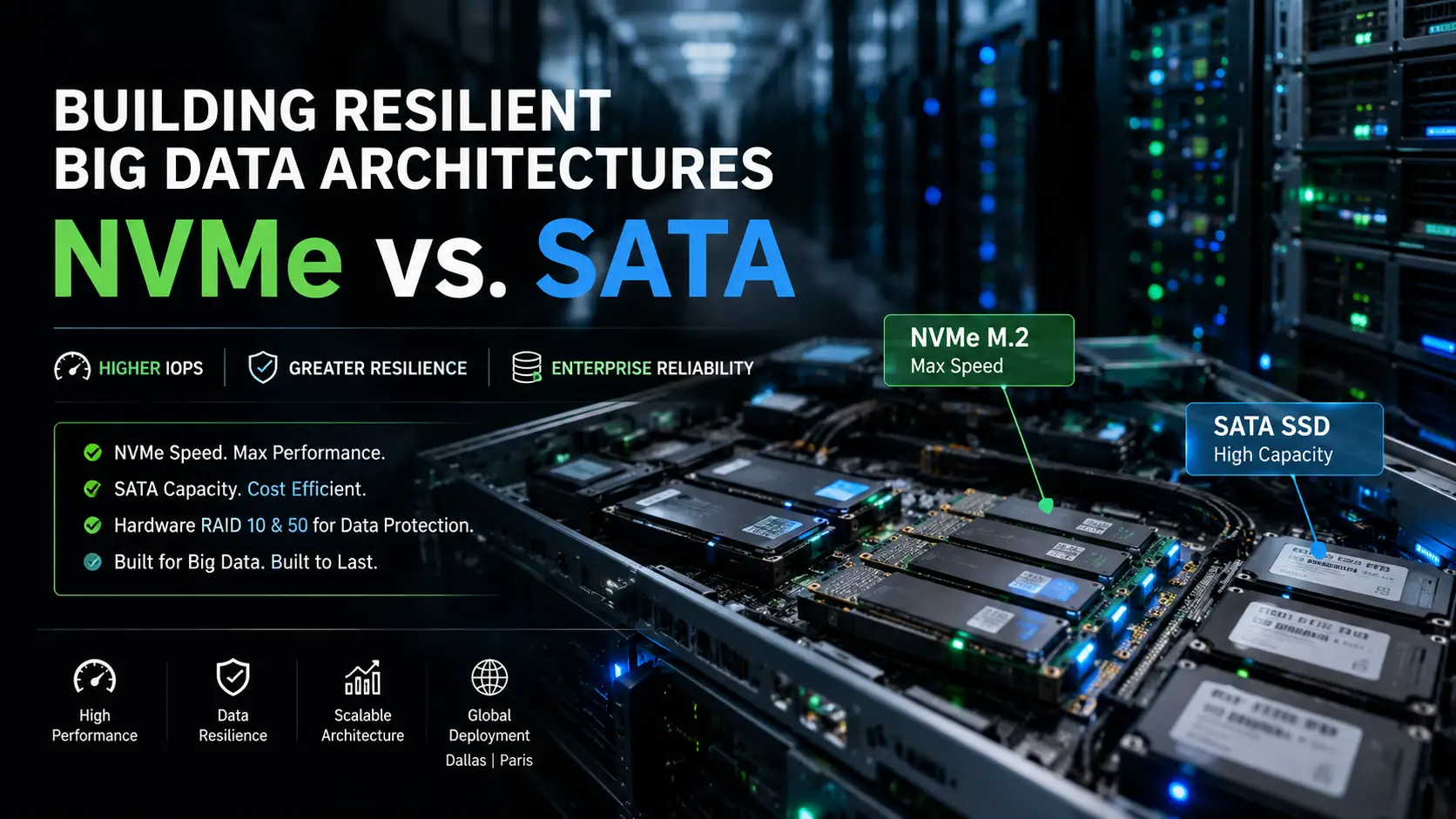
- Optimized I/O: Utilize fast PCIe Gen 4/5 NVMe storage to minimize model load times into VRAM, and unmetered 10Gbps networking for rapid API response delivery across your private network.
The EPY Host Bare Metal Advantage
Shared cloud instances often throttle continuous AI workloads. EPY Host provisions uncompromised bare metal dedicated servers equipped with massive VRAM, unmetered bandwidth, and absolute root control[cite: 2].
Whether you are running a single Ollama instance for internal R&D or deploying a multi-GPU vLLM cluster for thousands of external users, raw hardware ensures your 2027 infrastructure scales predictably without hidden API token costs or unexpected performance limits[cite: 2].
 Recent Topics for you