Modern enterprises are realizing that the initial convenience of hyperscale public clouds often masks a critical financial pitfall: egress fees. As data gravity increases and applications demand massive outbound data transfers, monthly billing becomes volatile and unsustainable. Repatriating workloads to a zero-egress enterprise private cloud built on dedicated bare metal servers offers the ultimate solution. By leveraging hyper-converged infrastructure (HCI) tools like Proxmox Virtual Environment (VE), integrated Software-Defined Networking (SDN), and Ceph for distributed storage, businesses can achieve the flexibility of AWS or Azure with the absolute cost predictability of fixed-rate dedicated servers.
The Egress Trap and the Shift to Private Cloud Architecture
When defining what is a private cloud, it is essential to look beyond virtualized internal networks. A true modern private cloud provides automated compute, scalable storage, and software-defined networking dedicated entirely to a single organization. In the ongoing debate of private cloud vs public cloud, the public cloud wins on day-one deployment speed, but the private cloud dominates in long-term total cost of ownership (TCO) and data sovereignty. Public cloud providers inherently penalize data mobility by charging exorbitant fees for data leaving their ecosystem.
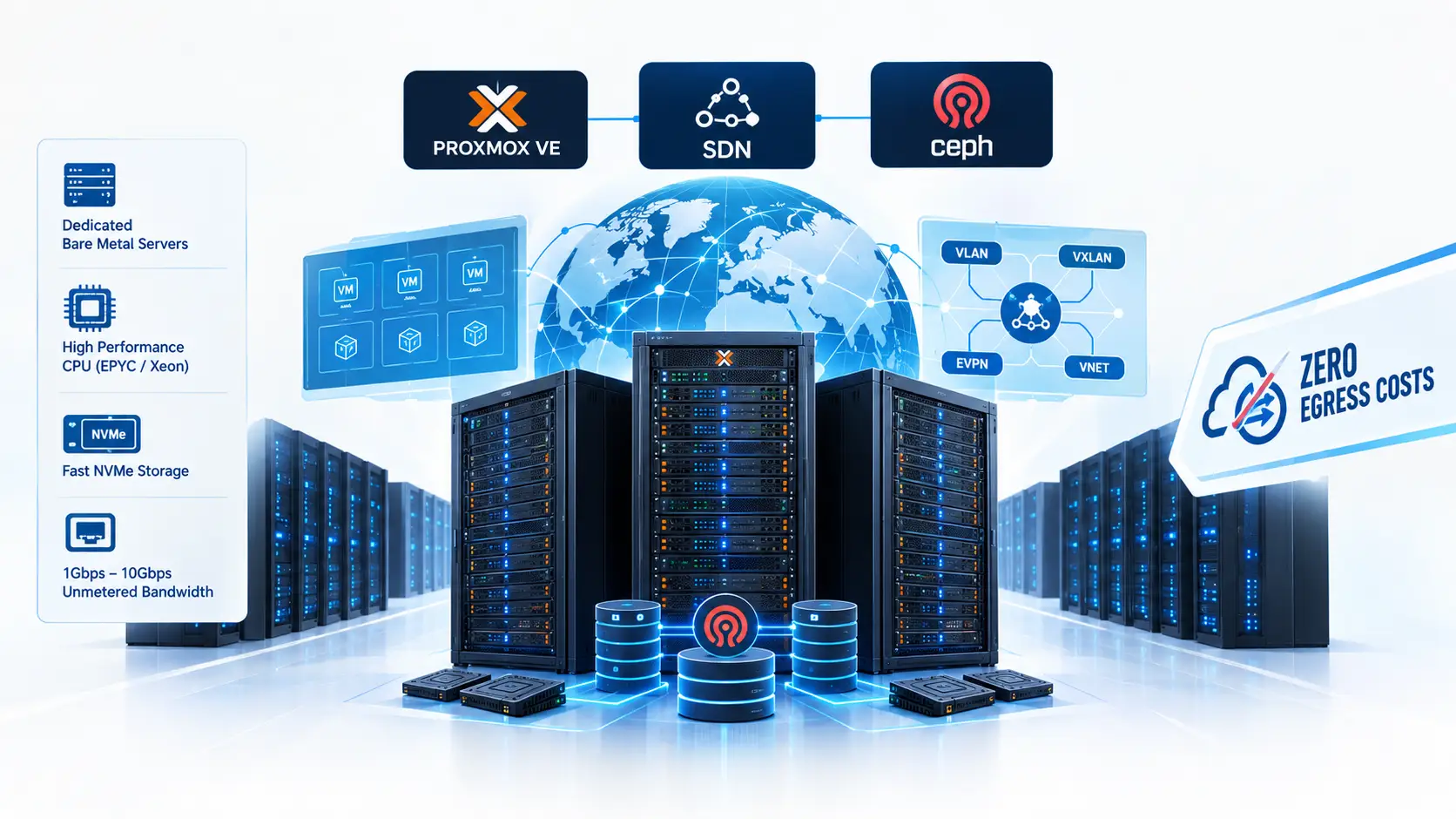
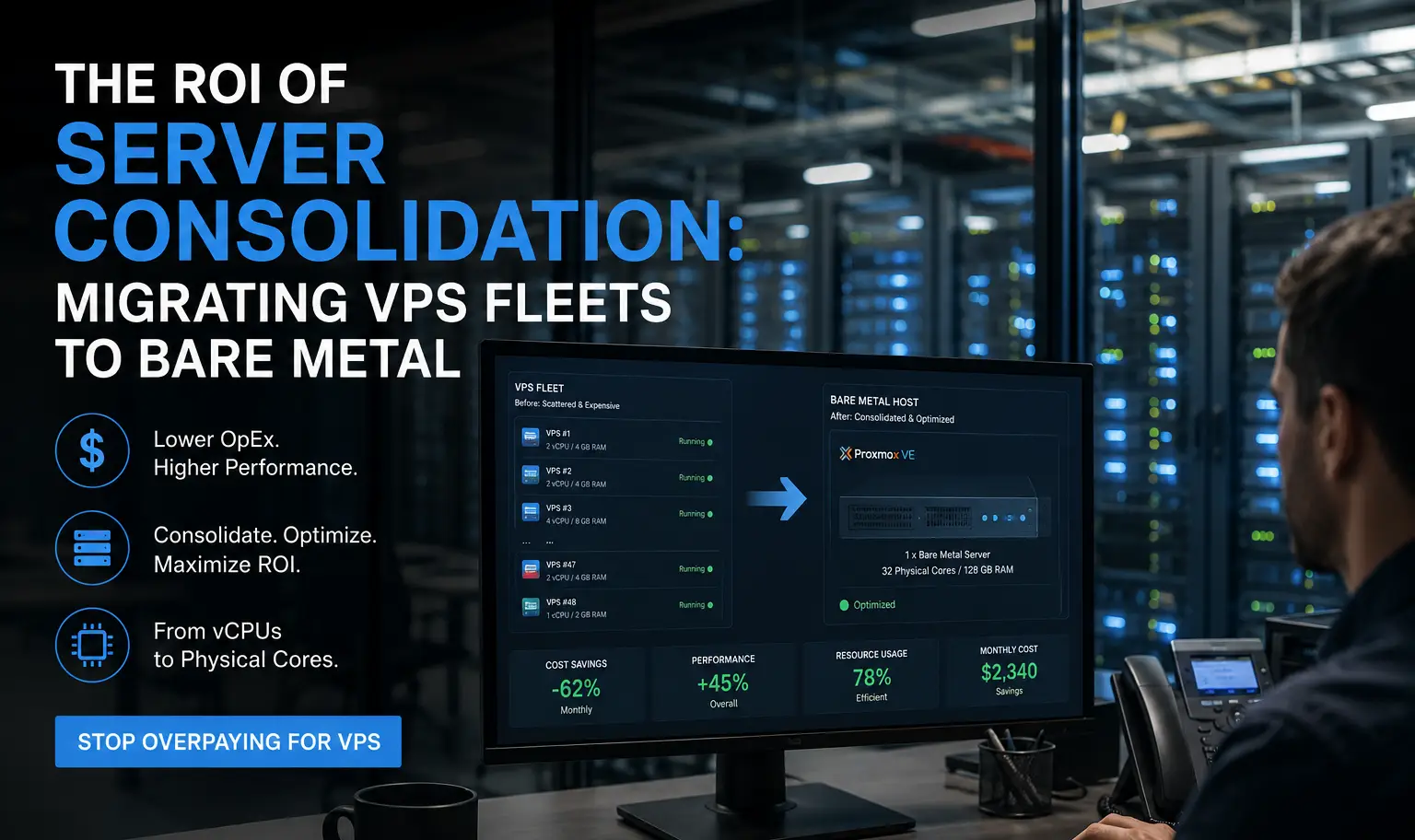
By migrating to private cloud hosting on bare metal, organizations transform variable OpEx into predictable OpEx. Bare metal providers like EPY Host offer unmetered or high-bandwidth ports (e.g., 1Gbps to 10Gbps) where you pay a flat monthly rate regardless of whether you transfer 10 TB or 100 TB out of the data center. To build a robust private cloud architecture that rivals hyperscalers, IT teams are turning to a proven open-source stack: Proxmox VE as the virtualization layer, Ceph for unified cluster storage, and Proxmox SDN to orchestrate complex virtual networks. This combination turns isolated dedicated servers into a seamless, high-availability data center fabric.
Architecting Hyper-Converged Infrastructure on Bare Metal
Transitioning from standalone servers to a unified cluster requires a hyper-converged approach where compute, storage, and networking are managed from a single pane of glass. Designing this architecture correctly ensures that if one physical server experiences a hardware failure, your virtual machines (VMs) and containers automatically migrate and restart on surviving nodes without data loss.
- Compute Foundation: Proxmox VE acts as a powerful Type-1 hypervisor based on Debian Linux, supporting both KVM for full virtualization and LXC for lightweight containerization.
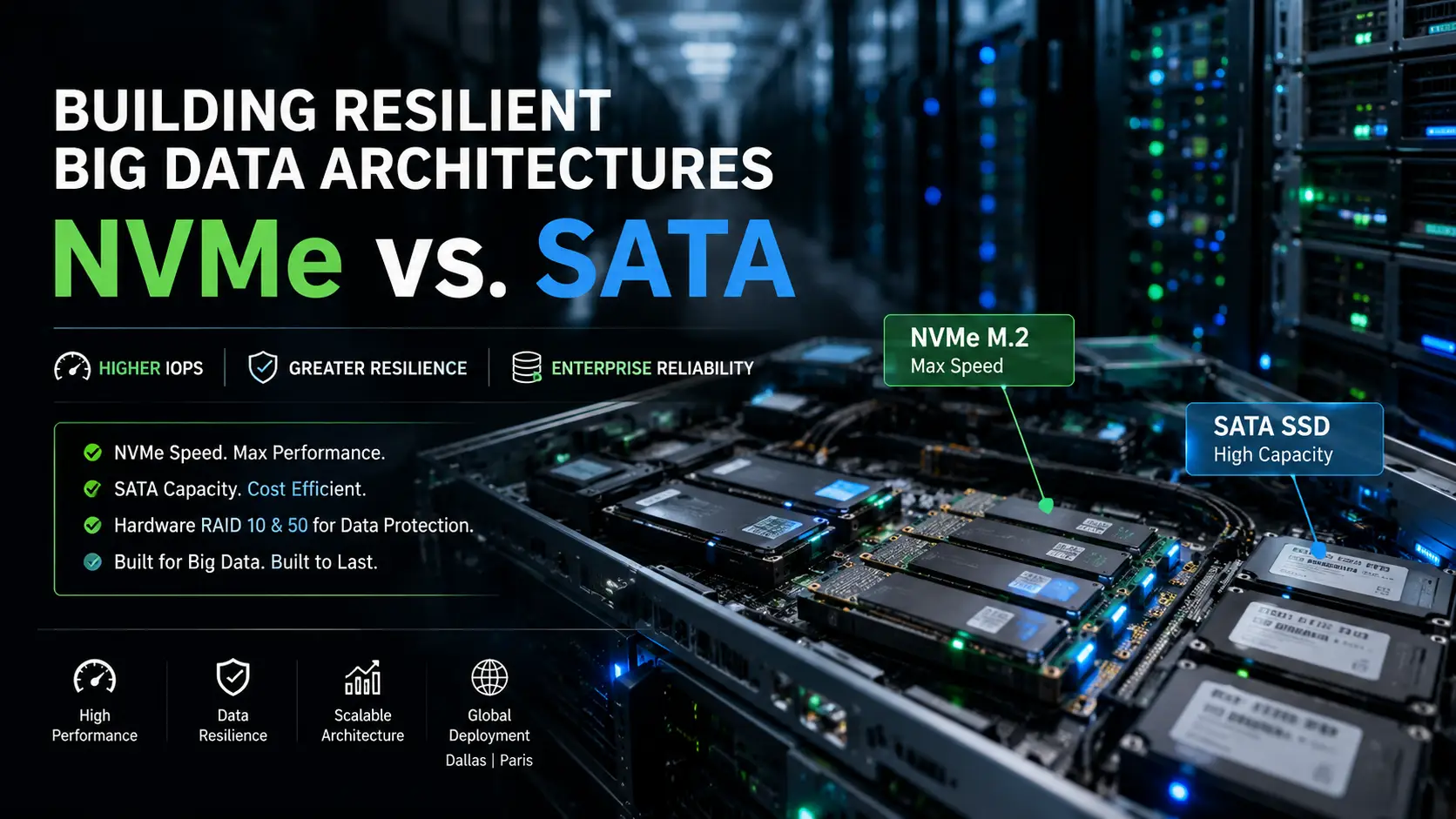
- Distributed Storage: Ceph transforms individual NVMe drives across multiple physical servers into a highly resilient, shared private cloud storage pool.
- Networking Layer: Proxmox SDN allows administrators to create complex virtual networks, VXLANs, and EVPN setups, isolating tenant traffic much like a hyperscaler Virtual Private Cloud (VPC).
- Quorum Requirements: A minimum of three dedicated servers is strictly required to establish a reliable cluster quorum, preventing "split-brain" scenarios during network partitions.
Securing servers with high core counts (e.g., AMD EPYC or Intel Xeon scalable processors) and massive NVMe arrays ensures that the underlying bare metal can handle the intense I/O requirements of a hyper-converged cluster. EPY Host streamlines this initiation phase by offering pre-installed Proxmox VE on high-performance infrastructure, allowing engineering teams to bypass ISO mounting and jump straight into cluster orchestration.
Deploying Proxmox, SDN, and Ceph Across Nodes
Once your three dedicated servers are provisioned, the initial step is joining them into a unified Proxmox datacenter. This requires establishing a secure, private backend network between the nodes. In a datacenter environment, this is achieved using private VLANs or dedicated secondary network interface cards (NICs) connected via a localized switch. This backend network is crucial; it isolates sensitive cluster heartbeat traffic and massive storage replication data from the public internet.
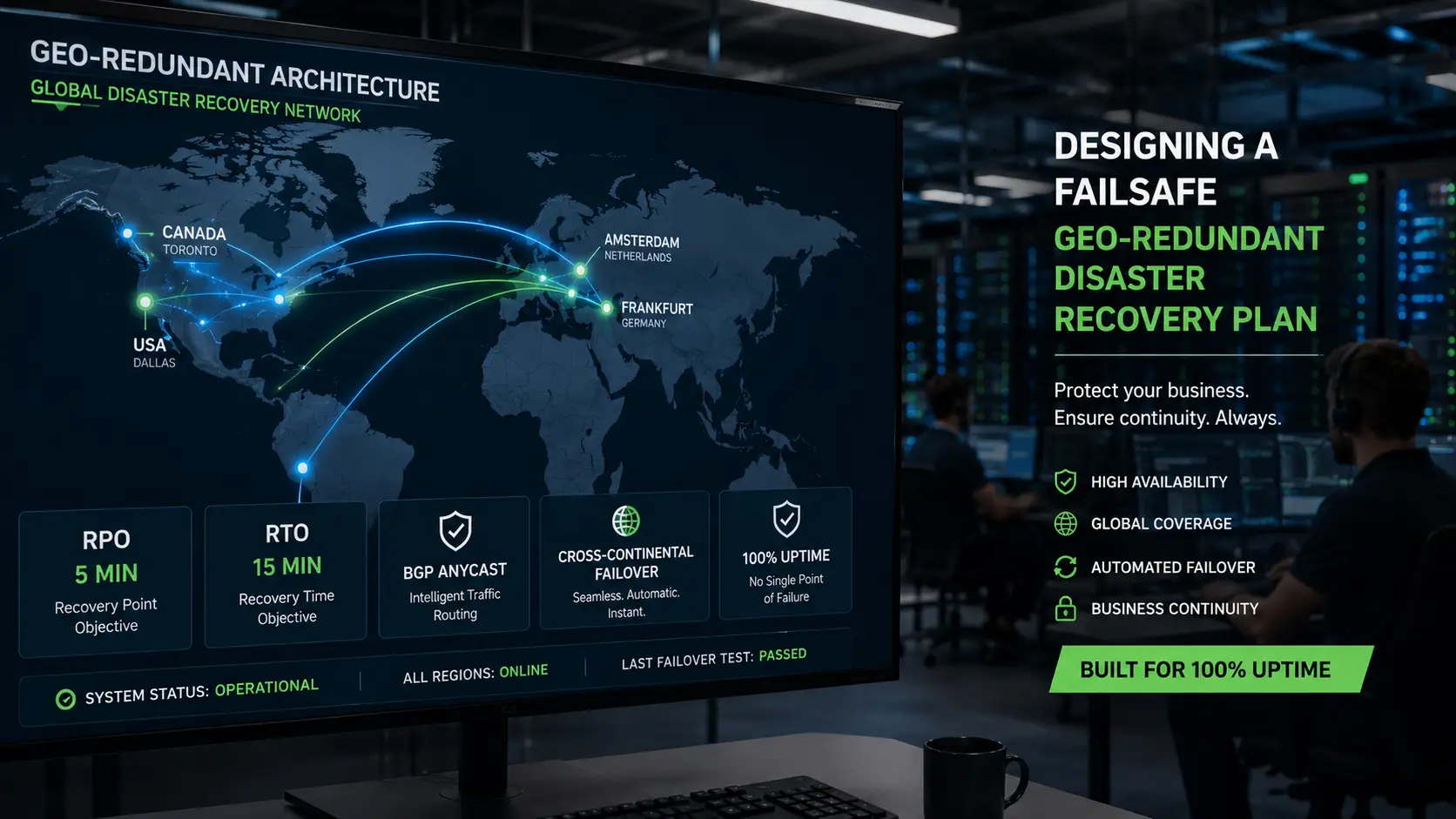
With the cluster formed, initializing Ceph is the next critical phase. Ceph requires raw, unformatted block devices to function optimally. By dedicating multiple high-speed NVMe drives on each server as Ceph Object Storage Daemons (OSDs), the cluster pools these drives into a unified fabric. Data is automatically replicated across different physical nodes. If Node A suffers a catastrophic motherboard failure, Nodes B and C already possess exact replicas of the data, allowing Proxmox to automatically resurrect Node A’s VMs on the surviving hardware.
The final piece of the architectural puzzle is Proxmox SDN. Historically, managing complex VLANs across multiple bare metal servers required extensive physical switch configuration. Proxmox SDN brings this capability into the hypervisor layer.
- Enable the experimental SDN feature within the Proxmox datacenter configuration file.
- Create an EVPN controller to manage routing information across the cluster.
- Define a VXLAN zone, which encapsulates Layer 2 Ethernet frames within Layer 3 UDP packets, allowing VMs to communicate securely across physical nodes.
- Deploy Virtual Networks (VNets) and assign subnets, effectively creating isolated VPCs for different departments, applications, or clients without touching the physical data center switches.
The Cost Economics of Repatriation
The financial impact of deploying an enterprise private cloud on bare metal becomes undeniable when modeling data-intensive applications like media streaming, big data analytics, or global SaaS platforms.
| Infrastructure Metric | Hyperscaler Public Cloud | EPY Host Bare Metal Private Cloud |
|---|---|---|
| Compute Cost | High (Premium for vCPUs) | Fixed (Raw physical cores) |
| Storage IOPS Cost | Tiered pricing (Provisioned IOPS extra) | Fixed (Maximum capability of local NVMe) |
| Egress Fees | Approx. $0.05 - $0.09 per GB | $0.00 (Included in unmetered bandwidth) |
| 100TB Monthly Egress | ~$5,000 - $9,000 / month | Included in base server cost |
By utilizing EPY Host's dedicated servers, you eliminate the hyper-inflated margins applied to cloud bandwidth and provisioned storage IOPS. A three-node Proxmox cluster equipped with Enterprise NVMe drives provides millions of IOPS and terabytes of RAM at a fraction of the monthly cost of an equivalent public cloud footprint. The zero-egress model empowers businesses to freely replicate data, serve rich media, and scale global operations without the constant anxiety of a volatile monthly invoice.
 Recent Topics for you